2026 Top Incline Bed Lathe Machine Types and Prices

Time:2026-09-26 Author:Amelia
0%

Selecting the right Incline Bed Lathe Machine in 2026 requires more than comparing catalog prices. Machine geometry, spindle power, control systems, and after-sales support can change production results significantly. A compact CNC slant-bed lathe may suit small precision parts, while a heavy-duty turning center handles larger steel components with greater stability. Some models also include Y-axis milling, live tooling, or automated bar feeding.

This guide examines the main machine types, practical applications, and expected price levels for 2026. Entry-level machines may cost around $25,000 to $60,000. Advanced production models can exceed $150,000. These figures are approximate. Regional taxes, tooling, installation, software, and operator training may add substantial costs.

Real workshop experience matters.

A rigid machine should produce clean chips, consistent diameters, and steady surface finishes during long production runs. Buyers should inspect sample parts, test the control interface, and ask how quickly technicians respond to service requests. A polished brochure cannot replace a cutting trial. Nor can a low price guarantee value.

The comparison also considers spindle speed, chuck size, axis travel, motor torque, accuracy, and safety features. These details affect both productivity and maintenance. However, specifications sometimes appear impressive without showing real cutting conditions. That deserves careful review. Readers should request current quotations and confirm warranty terms before making a final decision. This overview aims to provide a practical, balanced starting point for engineers, purchasing teams, and workshop owners evaluating their next turning investment.
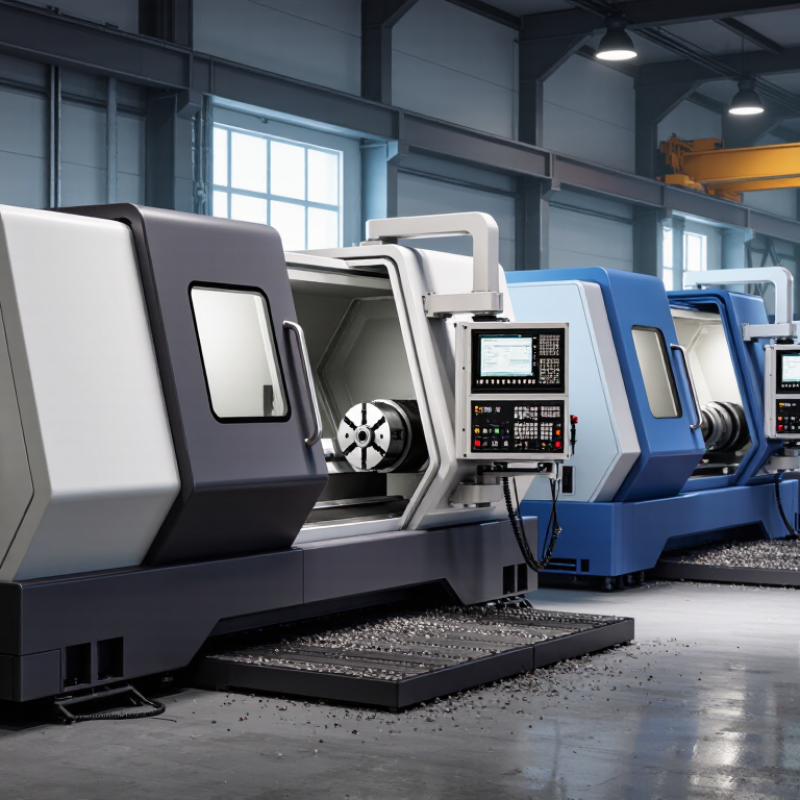
2026 Top Incline Bed Lathe Machine Types and Prices

Incline Bed Lathe Types by Swing, Spindle Bore, and Turning Length

2026 Top Incline Bed Lathe Machine Types and Prices

Incline Bed Lathe Types by Swing, Spindle Bore, and Turning Length

Incline bed lathes are easier to compare when grouped by swing, spindle bore, and turning length. Swing describes the largest workpiece diameter the machine can accommodate over its bed. Smaller swings suit compact shafts and fittings; larger swings provide room for broader components. More capacity can mean a larger footprint and higher purchase cost. Check the usable turning diameter, not just the headline swing figure.

Spindle bore matters when bar stock must pass through the spindle. A wider bore handles larger stock, but may add cost and affect machine configuration. Turning length sets the maximum distance between centers, so long shafts need more bed capacity. These options combine differently: a machine with generous swing may still have a short turning length. Prices vary with capacity, control system, tooling, and included accessories, so compare complete quotations rather than base figures.

Tips: Measure your largest real workpiece and leave clearance for the chuck and tools. Confirm bar diameter, required finished length, and floor space before choosing. Ask whether quoted prices include setup and essential tooling. A spec sheet can look convincing; I would still verify the actual working envelope with the supplier.

2026 Price Ranges: Entry Models at $20,000–$50,000

For 2026, entry-level incline-bed lathes commonly fall within the $20,000–$50,000 price range. Treat this as a planning estimate, not a guaranteed quote. Price depends on swing, spindle bore, control, and included tooling. A basic machine may still require a separate chuck, toolholders, coolant equipment, freight, leveling, and operator training. That matters. Grand View Research’s 2023 report valued the global CNC machine market at $101.22 billion. It projected 5.5% annual growth through 2030. This broad market data signals demand, but does not set prices for individual lathes.

At the lower end, compact models may suit short-run turning of small steel or aluminum parts. They often have modest spindle capacity and fewer automatic features. Near $50,000, buyers may find larger work envelopes, stronger spindle options, or more capable controls. Configurations vary sharply. Ask for a written quote listing chuck size, bar capacity, turret stations, accuracy conditions, warranty, and installation. Test cycle time using your actual part. Paper specifications can flatter. I would not treat a low purchase price alone as proof of value.

Tips: Compare the complete installed cost, not just the machine price. Ask whether the quote includes freight, setup, and basic tooling. Save a sample part drawing for supplier discussions; small details can change the required configuration.

Production CNC Incline Lathes: 2,000–4,000 RPM and 8–20-Inch Swing

Production incline-bed lathes commonly span 2,000–4,000 RPM and 8–20-inch swing, but those figures need context. An 8-inch swing suits smaller components and compact work cells; a 20-inch swing accommodates larger blanks, yet usually needs more floor space and workholding capacity. Maximum RPM is not a promise of steady cutting. Chuck limits, workpiece balance, tooling, and spindle torque all matter. That matters.

Grand View Research valued the global CNC machine market at about US$101.2 billion in 2024, reflecting broad demand for automated production equipment. The International Federation of Robotics reported 541,302 industrial robot installations worldwide in 2023, a record-high second annual total. These figures support interest in automation, but neither predicts a lathe’s output. Buyers should compare sustained cutting speed, spindle power, rapid traverse, and bar-feed compatibility against actual parts.

A practical caveat: advertised swing is measured over the bed, not necessarily the usable diameter after fitting a chuck and tool. A machine near 4,000 RPM may excel on smaller stock, while a larger-diameter cut often needs lower speed and adequate torque. One point worth questioning is cycle-time claims based only on maximum RPM; real trials with the intended material reveal more. Sources: Grand View Research, CNC Machine Market Size, Share & Trends Analysis Report; International Federation of Robotics, World Robotics 2024.

Heavy-Duty Incline Bed Models: 30–50 mm Spindle Bore and Higher Costs

Heavy-duty incline bed lathes with 30–50 mm spindle bores suit shops turning larger bar stock or running repeated production jobs. The wider bore lets material pass through the spindle, reducing cut-to-length handling. A rigid slanted bed also helps chips fall clear and gives operators better access to the cutting area. These details matter during long shifts. Yet a larger bore alone does not guarantee better output; spindle power, chuck capacity, and tool-turret layout must match the work.

In 2026, a basic machine in this class may cost roughly US$20,000–$40,000, while higher-spec packages can reach US$50,000 or more. Prices vary with bore size, live tooling, bar feeders, control options, and installation. Freight, training, and tooling can add several thousand dollars. Ask for a quote that separates the machine from those extras. That matters. A 50 mm bore may sound like useful insurance, but it can raise purchase and operating costs when most jobs use smaller stock. Not always. Compare the parts you actually make, including their diameters, lengths, and tolerance needs. One trade-off is easy to miss: the cheapest configuration may lack the rigidity or accessories needed for steady production. Verify the spindle specifications and test representative parts before committing.

2026 Incline Bed Lathe Machine Types and Estimated Prices

Indicative new-machine budget ranges in USD. Heavy-duty models with 30–50 mm spindle bores generally cost more than compact configurations.

Prices are planning estimates, not supplier quotations. Final costs vary with machine size, spindle capacity, control system, automation, tooling, shipping, and installation; these items may not be included.

Selection Standards: ISO 230-2 Accuracy, Power, Tooling, and Maintenance Data

For a 2026 incline-bed lathe, judge accuracy by test evidence, not catalog adjectives. ISO 230-2:2014 defines tests for numerically controlled machine-tool positioning accuracy and repeatability. Ask for results across the working travel, in both directions, under stated test conditions. A single center-point reading is not enough. Check whether the report identifies axis travel, measurement method, and thermal conditions; otherwise, comparisons between machines may be misleading.

Power should match the actual cut. For example, a 15 kW spindle running at 80% load provides about 12 kW of usable input before transmission losses. Confirm torque at low speed, not just peak power. Tooling costs also matter: list live-tool holders, boring bars, chuck size, and probe options separately. A lower machine price can conceal a costly tooling package. Small detail, big difference.

Maintenance figures deserve careful reading. The U.S. Department of Energy’s Operations & Maintenance Best Practices Guide reports typical predictive-maintenance savings of 8–12% over preventive maintenance, across industrial applications; this is not a lathe-specific guarantee. Ask for lubrication intervals, filter part numbers, alarm history access, and service-hour estimates. ISO 230-2 accuracy data cannot predict every shop-floor result. A neat test sheet may still miss thermal drift during a long production run. Include a warm-up cut in acceptance checks.

2026 Top Incline Bed Lathe Machine Types and Prices - Selection Standards: ISO 230-2 Accuracy, Power, Tooling, and Maintenance Data

Planning guide for comparing new CNC incline-bed lathes. Price and performance figures are indicative ranges, not guaranteed specifications for a particular machine.

Machine type Typical work and chuck size Indicative spindle power Typical bar capacity ISO 230-2 axis positioning benchmark* Common tooling and options Indicative 2026 price (USD)** Maintenance considerations Best suited to
Compact 2-axis slant-bed CNC lathe Small turned parts; approximately 5–6 in chuck About 5.5–11 kW Approximately 35–52 mm, depending on spindle bore and configuration Typical published or acceptance-test targets: linear-axis positioning accuracy about 8–15 µm; bidirectional repeatability about 4–8 µm 8–12 station turret; hydraulic or manual chuck; optional parts catcher and bar feeder $25,000–$70,000 Check way-lube level and delivery, chuck condition, coolant concentration, filters, and chip removal. Verify bar-feeder alignment if fitted. Job shops and production of small-to-medium components where floor space and entry cost matter
General-purpose 2-axis slant-bed lathe Medium components; approximately 8 in chuck About 11–22 kW Approximately 52–76 mm Typical target range: positioning accuracy about 8–15 µm; bidirectional repeatability about 4–8 µm 10–12 station turret; live tooling may be optional; bar feeder, tool setter, and parts catcher commonly available $60,000–$160,000 Monitor spindle temperature and vibration, turret indexing, lubrication, coolant cleanliness, and hydraulic pressure. Inspect chuck jaws and drawtube routinely. Mixed-batch work and repeat production of shafts, fittings, and general turned parts
Heavy-duty 2-axis slant-bed lathe Larger or heavier cuts; approximately 10–12 in chuck About 18–37 kW Approximately 75–102 mm Typical target range: positioning accuracy about 10–18 µm; bidirectional repeatability about 5–10 µm Heavy-duty turret; high-pressure coolant and chip conveyor often available; steady rest or tailstock may be specified $120,000–$350,000 Allow for higher coolant and chip-management demand. Check foundation and leveling, spindle bearings, hydraulic systems, and wear under heavy cutting loads. Large-diameter parts, tougher materials, and operations requiring higher rigidity and torque
Slant-bed lathe with live tooling and Y-axis Turn-mill work in one setup; commonly 6–10 in chuck About 11–30 kW at the main spindle; live-tool power is configuration-dependent Approximately 45–76 mm Typical target range: linear-axis positioning accuracy about 8–15 µm; bidirectional repeatability about 4–8 µm. Y-axis figures should be confirmed separately. Live-tool turret, Y-axis, C-axis, driven holders, tool setter, and optional high-pressure coolant $120,000–$350,000 In addition to lathe checks, inspect live-tool holders, driven-tool gearing, C-axis indexing, and coolant delivery. Maintain accurate tool offsets and holder condition. Parts needing cross-holes, flats, or milled features without transferring to a separate machining center
Twin-spindle or sub-spindle slant-bed lathe Front- and back-side machining in one cycle; commonly 6–10 in main chuck About 11–30 kW per spindle, depending on configuration Approximately 45–76 mm on the main spindle; sub-spindle capacity varies Typical target range: linear-axis positioning accuracy about 8–15 µm; bidirectional repeatability about 4–8 µm. Validate each spindle and axis independently. Main and sub-spindle, transfer tooling, parts catcher, bar feeder, and optional live tooling or Y-axis $180,000–$500,000 Check synchronization and alignment between spindles, transfer timing, collets or chucks, axis lubrication, and coolant filtration. More complex setups require skilled service. High-volume parts requiring front- and back-end operations with reduced handling
Multi-axis turn-mill slant-bed machine Complex components with extensive turning and milling; chuck and axis layout vary About 15–45 kW at the main spindle; auxiliary spindle and milling power vary Commonly about 45–102 mm, depending on the spindle and bar-feed arrangement Axis targets are configuration-specific. Request ISO 230-2 results for each linear axis and rotary-axis test data where applicable; do not infer part accuracy from axis figures alone. Multiple axes, live tooling, Y-axis, sub-spindle, advanced probing, and application-specific tool packages $250,000–$800,000+ Plan for more frequent calibration and preventive maintenance of rotary axes, driven tools, thermal management, and probing systems. Consider service response and operator training. Complex, high-value parts where fewer setups and integrated machining can justify higher investment

* ISO 230-2 note: ISO 230-2 specifies test methods for determining the accuracy and repeatability of positioning numerically controlled axes. The ranges above are indicative comparison benchmarks only—not ISO limits, certifications, or guaranteed machine performance. Request the actual test report, axis travel, measurement conditions, compensation status, and acceptance criteria from the supplier. Axis positioning results are not the same as finished-part accuracy.

** Price note: USD estimates are broad 2026 planning ranges for new equipment. Actual quotations vary with country, configuration, CNC and automation package, freight, installation, training, duties, and service coverage. Confirm what is included in each quote.

Selection checklist: Match chuck size, bar capacity, spindle torque, axis travel, and tooling to the part envelope and material. Compare cycle time using representative parts, verify tool and bar-feeder compatibility, and evaluate machine leveling, chip handling, coolant capacity, maintenance access, and local service support.

FAQS

What does swing mean on an incline-bed lathe?

Swing is the largest diameter a workpiece can reach above the bed. Check usable turning diameter, not only the advertised figure. A larger swing needs more floor space and usually costs more.

Why is spindle bore important?

Spindle bore shows the maximum bar diameter passing through the spindle. A wider bore handles larger stock, but can increase cost. Measure your actual bar material carefully.

What does turning length describe?

Turning length is the maximum distance between centers. Long shafts need greater bed capacity. A machine with large swing may still have limited turning length.

What price range is expected for entry-level models in 2026?

Entry-level incline-bed lathes commonly range from $20,000 to $50,000. This is only a planning estimate. Actual quotations vary with capacity, controls, tooling, and accessories.

What extra costs should buyers expect?

The base price may exclude the chuck, toolholders, coolant equipment, freight, leveling, and training. These costs can add up quickly. That part is easy to underestimate.

How can I choose the correct machine size?

Measure your largest real workpiece, finished length, bar diameter, and available floor space. Leave clearance for the chuck and tools. Measure twice.

What should a written quotation include?

Ask for chuck size, bar capacity, turret stations, accuracy conditions, warranty, installation, freight, and essential tooling. A detailed quote prevents awkward surprises later.

Are paper specifications enough for comparing machines?

Not always. Test cycle time with your actual part and verify the working envelope. A specification sheet can look convincing. I would still check the machine in practice.

Conclusion

The 2026 Incline Bed Lathe Machine market offers a wide range of configurations categorized by swing capacity, spindle bore, and maximum turning length. Entry-level models are generally priced between $20,000 and $50,000, making them suitable for small workshops and businesses beginning to adopt CNC machining. Production-oriented machines typically deliver spindle speeds of 2,000–4,000 RPM and support an 8–20-inch swing, providing a balance of speed, rigidity, and repeatability for continuous manufacturing.

For demanding applications, heavy-duty incline bed lathes may feature a 30–50 mm spindle bore or larger, stronger structures, and higher purchase costs. Buyers should evaluate ISO 230-2 positioning accuracy, motor power, tooling compatibility, chip management, maintenance requirements, and available service data. Comparing these factors with workpiece size, production volume, and long-term operating expenses can help users select a reliable machine that delivers consistent performance and practical value.


Amelia

Amelia

Amelia is a seasoned marketing professional with a wealth of expertise in our company’s core offerings. With an unwavering passion for driving growth and innovation, she plays a pivotal role in shaping our marketing strategies and enhancing brand visibility. A key aspect of her responsibilities......